
Click banner to view in browser
I used to think the goal was to figure out how to be the best ‘me’ I could be, and then go be it. Now I’ve come to think that genuine healing doesn’t come from figuring anything out, but instead in seeing ourselves as elements/cells in one body/mind. If you've been finding yourself feeling hemmed in or held back in some important way, maybe this perspective can help.
When I Faced a Cosmic Question
 I was devastated when my second marriage came unraveled, feeling like everything I had ever put my faith into... including the idea of marriage and family, my church, and God... had abandoned me. I felt cast out into the universe with nothing whatsoever to hold onto.
One night, lying catatonic in bed, I was consumed by the very question Einstein had posed as the most important question humans ever ask, "Is the universe a friendly place?"
In my deep grief, I needed something to help me feel anything other than what I was feeling, which was unbearable.
I went to the piano I'd hauled around since childhood and sat down. I tried playing a few things I'd played occasionally for years... lame attempts to gloss over the agony. Nothing I already knew was going to help.
So I opened both palms and started smashing the low keys to make the most awful noise possible.
Almost immediately I started crying which quickly grew to ugly sobbing.
I knew enough about emotional release to know this catharsis was a good thing. But this wasn’t calculated. I felt helpless, hopeless, and desperate for anything that might help get me to anywhere other than where I was.
Amid the cacophony on the piano, I noticed something I hadn't expected. The part of me that felt so utterly alone in the universe LOVED hearing that horrible noise. That part felt not only heard and seen but reflected and mirrored, directly, instantly, in real time.
It was proof that somehow this universe had come up with a way to show that part of me that it was not alone after all.
I experienced the piano as a portal to something deeper than I was normally aware of.
The Kitchen Revelation
Recently, after 25 years of using music to help people connect more deeply with themselves and each other, I was standing in my kitchen when an old revelation hit me in a new way.
There is no clear place to draw a boundary between 'Self' and 'Other' - not our skin, energy body, thoughts, or beliefs.
When I sat at the piano with this understanding, letting go of the need to impress or seek external validation (being inextricably connected already), something shifted. The sounds that emerged felt immediately more alive and engaging, interesting and fun to hear.
As I released old patterns and the pressure to perform, the music began to flow naturally. Without trying to express myself or prove anything, I simply explored what happened when I let the delusion of separation dissolve into the sounds.
What’s so cool about this? When we find that grounding orientation, the sounds that emerge from there are inherently musical.
Why This Matters More Than Ever
Federico Faggin, the physicist who invented the microprocessor (a very practical guy!) has been studying consciousness full-time for over 20 years now. He and philosophers like Bernardo Kastrup at the Essentia Foundation are saying something that flips a whole lot of scripts: consciousness is not a product of our brains.
Instead, our whole selves exist from it. Faggin says consciousness and free will are postulates. That they are the starting point. Self-evident. Don't need to do anything or prove anything to "get it." We emerge from consciousness experiencing itself.
 Think about that for a second. Not "you have consciousness." You're a wave in an ocean of consciousness, temporarily risen up, thinking you're separate from the water.
This isn't just philosophical navel-gazing. Our death grip on believing in separation ultimately drains life energy. It separates the fruit from the vine.
Climate change? That's what happens when we think nature is "out there" instead of what we are. Political polarization? That's what happens when we see others as fundamentally different rather than different expressions of the same whole.
That crushing anxiety you feel trying to hold your life together? That's what happens when you think you're alone in carrying the weight.
How Piano Becomes Portal
Here's what nobody tells you about improvisation: it's not about being creative or talented. It's about getting out of the way.
When you sit at a piano without sheet music, without a plan, something interesting happens. Your thinking mind... the one that maintains the illusion of separation... has nothing to grab onto. No notes to read. No structure to follow. Just you, the keys, and this moment.
At first, it's terrifying. Your fingers hover over the keys. The inner critic starts its familiar routine: "You don't know what you're doing. This will sound terrible. What if someone hears?"
But if you can stay with it, something shifts. Your fingers find a note. Then another. Not because "you" decided to play them, but because something moved through you. The music starts playing itself.
Of course, old habits die hard, and that’s why a practice is essential for relaxing old ways and enabling new ones to take root and grow. I designed a unique practice for this called Sound You/Us (SUS). It's not about playing the piano or playing “music” per se.
It's about discovering that the boundary between you and The Music was never there.
What Happens When the Walls Come Down
Briony Greenhill was one of the guests on the Your Music Your Way summit I produced in the Spring of 2020, just as Covid was hitting. The topic of the summit was how to use sound improv as a way of learning to navigate the unknown. (Talk about good timing…!)
She taught vocal improv, individually and in groups, and our approaches to teaching improvisation, and the value that comes from it, aligned beautifully.
She had played, and even taught piano, but she hadn't played for years because she didn't "connect" with it the way she could with her voice. It hadn't been truly enjoyable, satisfying, or fulfilling for years.
I gave her one lesson on how to engage the piano in a wholly different way... without chords, scales, memorizing, written music, or even note names! Without the traditional musical map that is so universal, even with virtually all "easy piano" teachers. She had this experience...
So he has this crazy method. I was a full-time piano teacher for 5 years, I've seen just about every method there is, and I've never seen anything like this.
Omg. It is so simple. And so genius.
Now I do it for just 10 mins a day. It starts messy, then it gets musical, then it gets deep. Often I cry. And music starts to flow through me again. Like it used to.
I'm not making mistakes any more. I'm staying effortlessly within key.
 It's like he's helped me get back into the heart of music.
Thank you Daniel. Thank you thank you thank you.
Briony Greenhill - Musician, Vocal improv coach, Workshop leader
That's what happens when you experience yourself as part of the whole rather than separate from it. The weight you've been carrying alone? It was never yours alone to carry.
The Practice That Changes Everything
You don't need to be musical to do this. You don't even need a piano (though it works best with one). Here's the basic practice:
Sit at the keys. Close your eyes. Listen to the sounds happening in the moment and notice their effect.
Place your hands on the keys without pressing them. Feel the coolness, the texture. Where do your fingers end and the keys begin?
Now, without deciding what to play, let one finger press one key. Listen to the sound. Not just with your ears... with your whole body. Feel how the vibration moves through you, through the piano, through the air, through the walls.
Press another key. Not because you decided to, but because "it wants to be pressed." It seems mystical, but it's a very real experience. You're learning to act from a deeper level of awareness about reality as it actually is. From wholeness rather than separation.
Keep going. When the inner critic shows up (and it will), graciously acknowledge it and return to listening. You're not trying to make good music. You're discovering what happens when you stop being the music-maker and become the space where The Music occurs.
Beyond the Personal Crisis
Here's what I've noticed after guiding lots of people through this practice since 2014: the people drawn to it aren't usually beginners. They're successful healers, coaches, leaders... people who've already climbed many mountains. But they've reached a point where individual achievement feels hollow.
You've done the personal work. You've built the career. You've accumulated the credentials. Yet something's missing. That something? The direct experience of your connection to everything else.
We're at a collective crossroads. The old model of separate individuals competing for resources is breaking down. Climate change, political upheaval, economic uncertainty... these aren't separate problems. They're symptoms of the same delusion: that we're separate.
The question for each of us isn't "How do I fix me?" It's "What is my place in all this? How do I fit in us?”
And that shift from "I" to "we" isn't just semantic. It's revolutionary.
What Becomes Possible
When you experience yourself as part of the whole, everything changes:
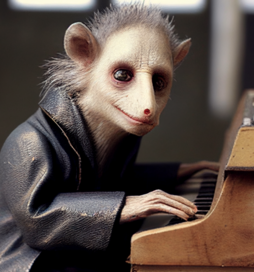 Decision-making becomes clearer. Instead of agonizing over what "you" should do, you listen for what wants to emerge through you.
Relationships transform. Conflict doesn't disappear, but it becomes like your left hand disagreeing with your right... workable, because you know you're part of the same body.
Creative blocks dissolve. There's no separate "you" who can be blocked. There's just consciousness exploring itself through your unique perspective.
That crushing anxiety about keeping it all together? It lightens. Not because your problems disappear, but because you're not carrying them alone. You never were.
The Sound of Connection
Last week on our weekly group call, we went around the circle (okay, the screen rectangle) as we often do, each playing spontaneously for a few minutes. Just humans letting sound move through their fingers.
What emerged was indescribable. Not because it was technically impressive. But because for those few precious minutes, the walls of separation came down just a bit. Each of us seemed to feel genuinely connected to The Music we were playing. And when The Music is expressed authentically with care, we hear it deep down, which connects us naturally to each other.
It was a beautiful illustration of what Chloe Goodchild, well-known and loved vocal improvisation coach, described as:
 This improvisation process really assists you to embody what I call sound awareness, to not just hear it on the outside of yourself as an interesting idea but to be able to feel it in every cell of the body.
Chloe Goodchild, Vocal improvisation teacher/coach
Your Next Note
If you're reading this and feeling something stir... that's not coincidence. That's recognition. Some part of you knows this truth: you're not separate. You never were.
The question isn't whether this is true. Physicists, philosophers, and mystics are all arriving at the same conclusion from different directions. The question is: What will you do (indeed, what will WE do) with this knowledge?
Knowing we're all one is just information. Living it? That takes practice. Fortunately, that practice doesn't have to be years of meditation or therapy (though those can work). Sometimes it's as simple as sitting at a piano and discovering that The Music can flow through easily.
When we allow in a different perspective.
The shift from "me" to "we" isn't just personal development. It's evolution. And it starts with one note, one breath, one moment of letting the boundaries dissolve.
Things to consider
What is wanting to emerge through you now, in this moment, as you consider this possibility?
What may be wanting to be birthed in you these days in general? Is there something flickering that seems to be trying to get your attention?
Have you ever longed for a better relationship with music and music-making that suits you and your lifestyle better?
A good way to see if this approach might be a fit for you is to explore the various resources in the Musical Living Starter Kit.
Key Facts
The feeling of separation is experientially real but ultimately false... physics and philosophy are converging on this understanding
Piano improvisation bypasses the thinking mind that maintains separation, allowing direct experience of deeper connection
Sound You/Us (SUS) practice requires no musical training... only willingness to show up, listen and respond
Successful healers and leaders often hit a wall where individual achievement feels empty... this signals readiness for the shift
Acting from wholeness rather than separation changes decision-making, relationships, and creative expression
The practice works because sound vibration literally connects player, instrument, and environment as one field
Group improvisation sessions create tangible experiences of collective consciousness in action
The shift from "I" to "we" isn't philosophical... it's practical and changes how we approach every challenge
FAQ
Q: Do I need any musical experience to try Sound You/Us practice?
A: None at all. In fact, trained musicians sometimes have to unlearn their habits first. This isn't about making music... it's about using sound to experience connection. If you can press a piano key and listen, you can do this.
Q: How is this different from regular piano improvisation or music therapy?
A: Traditional improvisation focuses on expressing your individual creativity or emotions. SUS inverts this... instead of you playing the music, you discover how music plays through you. It's about dissolving the player-instrument boundary, not strengthening it.
Q: What if I don't have access to a piano?
A: While piano works best with piano because of its versatility and ease of playing (i.e. pushing a button down - much easier than bassoon!). Good keyboards are relatively inexpensive these days. I’m happy to help you find your right keyboard. (Also, this work can also be done quite powerfully on hand drums.)
Q: How long before I experience this sense of connection you're describing?
A: Some people feel it in their first session, others take weeks. The key is to simply show up, listen, feel, play, listen, feel, pl….
Q: Is this based on any scientific understanding or is it purely spiritual?
A: Both. Physicists like Federico Faggin and consciousness researchers like Bernardo Kastrup provide the theoretical framework. The practice itself is experiential. You don't have to believe anything... just try it and see what happens.
Q: Can this help with my anxiety and feeling overwhelmed?
A: Many participants report significant relief from anxiety and stress, but not because the practice fixes anything. Rather, it shifts your relationship to the overwhelm. When you experience yourself in a new context, the weight redistributes naturally.
Sources & Citations
Federico Faggin - Irreducible: Consciousness, Life, Computers, and Human Nature - Pioneer of microprocessor technology turned consciousness researcher
Bernardo Kastrup / The Essentia Foundation - Analytic Idealism and Cosmopsychism - Leading philosophical framework for consciousness as fundamental
Oliver Sacks - Musicophilia: Tales of Music and the Brain - Neurologist exploring music's power to access altered states of consciousness
W.A. Matthieu - The Listening Book - Deep listening as pathway to unity consciousness through sound
Eileen McKusick - Electric Body, Electric Health - Biofield science and sound therapy research on human energy field coherence
John Stuart Reid Jr. - Cymatics - Visualizing how sound creates coherent patterns in matter


Comments