The Drum Doorway
Play your way home on drum
Living out of tune
Can be so painful.
But you don't have to know.
You can play a different note
and listen for your song.
Play your way home through sound
There are moments when life doesn’t feel broken or wrong, just slightly out of sync.
Not enough to diagnose.
Not enough to explain.
But enough to feel.
For many people, sound offers a way back, not through insight or effort, but through direct contact with what’s happening now.
This doorway uses the drum as a simple, elemental interface for listening.
No musical background is required.
Nothing needs to be performed or shaped.
The work begins by allowing what’s present to move into sound.
A Different Entry Point
This practice is not about technique.
It’s not about becoming a drummer.
It uses the drum as a limited expressive field - a surface that makes it easier to play what’s actually present, without needing to refine, organize, or explain it.
One person.
One drum.
A clear invitation.
For some people, this is the most direct way into contact.
What the Drum Makes Possible
The drum offers very few expressive options.
That limitation is what gives it power.
With only a small range of pitches and no polyphony, expression can’t move upward into nuance or explanation. Attention is drawn instead to lower‑frequency signals, such as...
movement,
pressure,
pacing,
charge, and
release.
This makes it possible to express the shape of experience without needing to describe it.
People are often surprised by how much can be communicated through the drum - even without training or technique. What’s present can come through clearly enough to be heard and understood.
The drum doesn’t translate experience into sound.
It allows experience to move as sound.
That’s why the work can feel both immediate and precise, even with no words.
Drum and Piano — How They Differ (Without Hierarchy)
Both the drum and the piano are capable of great simplicity and great complexity.
Either can be played honestly.
Either can be sparse or sophisticated.
The difference is not expressive depth.
The difference is where variability lives.
On the drum, variability concentrates primarily in time and intensity — how sound arrives, how long it stays, how forcefully it’s delivered, and how gesture unfolds moment to moment. Complexity on the drum emerges through timing, repetition, restraint, and energetic modulation.
On the piano, variability expands across frequency as well as time. Each key produces a distinct pitch, and many pitches can sound together. With ten fingers and a sustain pedal, sounds can be layered, held, and related simultaneously.
Neither instrument is more advanced.
They simply offer different dimensions through which listening can organize itself.
Some experiences want fewer dimensions so sensation can speak directly.
Others want more room so complexity can be held without collapsing.
How to choose:
Begin with the instrument that matches the frequency of what’s asking to be heard.
What Drum Sessions Are Like
Sessions begin with an invitation to play what you feel inclined to play.
There is no imposed tempo.
No required pulse.
No pacing to follow.
You’re not asked to regulate yourself or organize your sound. The emphasis is on allowing what’s present to move into sound — directly, physically, without refinement.
Some people play softly.
Some play forcefully.
Some pause, listen, and begin again.
The drum holds it all.
Structure comes from the container, not from the rhythm. Listening happens as you play — not before, not after.
Over time, people begin to notice:
how they approach expression
where they hold back
where sound arrives easily
how it feels to stay with what’s emerging
Nothing needs to be corrected.
Nothing needs to be made musical.
What Tends to Change
While the work begins with expression rather than regulation, many people find it grounding over time.
Common shifts include:
greater capacity to feel without overwhelm
more tolerance for intensity and pause
clearer transitions from activation back into rest
less need to manage or contain experience
Regulation is not imposed.
It emerges as expression is allowed to complete.
"This changed my relationship to the drum. I don’t hesitate to approach it anymore. I can let myself play what flows through instead of worrying about what I don’t know."
Dana Williams
Who Tends to Be Drawn Here
People often arrive at the drum doorway when:
thinking and insight aren’t restoring balance
embodiment feels like the missing piece
rhythm already feels familiar or compelling
This includes people who hold space for others, as well as those simply wanting a steadier relationship with themselves.
There’s no diagnosis implied.
Just recognition.
Invitation
Tune U — Drum Doorway
If rhythm feels like a natural doorway for you, you’re welcome to begin here.
This practice stands on its own.
And it connects to a larger listening ecosystem if and when you’re curious.
No rush.
No hierarchy.
Just a clear place to start.
One practice. Two timeframes.
All drum options share the same foundational practice.
What changes is duration and how much territory we explore.
Duration reflects capacity, not seriousness.
Play Your Way on Drum — The Beat
6‑week live practice · Grounding
A foundational drum practice for restoring orientation through contact, sound, and attention.
Using simple, intuitive drumming, this container supports:
grounding attention
allowing expression to move fully
developing trust in direct contact
You’ll be:
playing what’s present
listening as sound unfolds
building continuity without pressure
This is a clear starting point — and a complete practice in itself.
Investment: $250
Best for:
Those wanting a direct, embodied way to regain steadiness.
Play Your Way on Drum — Full Arc
12‑week live practice · Relational
A sustained drum‑based practice for remaining oriented while holding complexity, intensity, or others.
This arc includes The Beat and continues into deeper continuity, where the drum becomes a reference point for responding, relating, and adapting.
Selected traditional rhythms may be introduced as supportive structures — not as repertoire, but as anchors for continuity.
You’ll be:
staying present under pressure
allowing intensity without overwhelm
using sound as a stabilizing reference across change
Investment: $450
Payment plans available.
Best for:
Those wanting more time for integration and continuity.
Who’s Holding This Practice
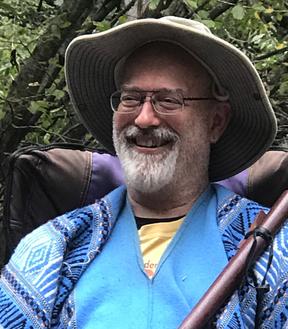
I'm Daniel Barber (Two Trees), and I am a drummer and ritual leader who has spent decades working with rhythm as a way of helping people come into right relationship with themselves, one another, and the moment they are in. I've led and supported music for grief rituals, rites of passage, celebrations, and community gatherings, where rhythm serves as a bridge between the visible and the unseen, the individual and the collective.
I am a certified guide with the Rite of Passage Council and an ordained Jubilee! Minister of Music and Ritual. My work is shaped by long experience in ceremonial and improvisational settings where listening, timing, and attunement are essential, and where rhythm is understood not only as performance, but as a living force that carries memory, meaning, and attuning.
Tune Yourself on Drum grows from this lineage of practice.
Through simple, accessible drumming, people are invited into a shared field of rhythm where grounding arises not from control, but from contact... with pulse, with breath, and with patterns older than words. I'm deeply grateful for the teachers, traditions, and communities that have shaped this work, and for the chance to offer rhythm in service of presence, connection, and belonging.
A Clear Place to Begin
If the drum feels like the right doorway, you’re welcome to begin here.
No pressure.
No aspirational stretch.
Just an honest next step.