Tune Yourself on Piano
A tuning practice through improvisational sound
Living out of tune
Can be so painful.
But you don't have to know.
You can play a different note
and listen for your song.
Not as a technique to master, but as a way of orienting to what’s actually present.
The Threshold
A place to pause
Before choosing anything, you’re invited to slow down.
Not to evaluate options or decide quickly —
but to notice what’s present.
What you’re carrying.
What you’re drawn toward.
What feels steady, uncertain, or quietly asking for attention.
Rather than asking which path is better or more advanced, we begin with a simpler question:
What kind of support are you needing right now?
This isn’t about who you are in some ultimate sense, or who you should become.
It’s about this moment along the way — and what would feel most supportive as you meet it.
You don’t need the pressure of choosing an “optimal” path.
An honest one is often more liberating.
What are you bringing today as you encounter this page?
"It felt welcoming to me. Okay.. there’s no judgment here."
- partipant
The Shape of the Work
Tune Yourself on Piano is a practice for tuning ourselves held in time.
All containers share the same foundational approach:
listening while playing
simple improvisation
noticing patterns and responses
returning rather than pushing
Sessions take place at a regular, agreed‑upon rhythm, depending on the container you choose.
A session typically includes:
time to arrive and settle
playing on the piano
reflection and integration
The emphasis is not on covering material or reaching outcomes, but on staying with what’s present.
The structure is steady, so your attention can rest.
It rests on the same foundational orientation: entering the piano as a coherent field rather than a set of tasks to master.
At the Threshold

A Note on Learning & Progression
While the core practice remains the same throughout Tune Yourself on Piano, the learning does unfold over time.
Each container holds a different relationship between:
permission and structure
freedom and form
simplicity and complexity
In the earlier work, the emphasis is on orientation, safety, and trust — learning how to listen and respond without pressure.
As time goes on, the same listening practices are applied to a widening musical territory. New harmonic relationships, patterns, and choices are introduced gradually, always in service of staying present rather than performing correctly.
Later work focuses on integration: how musical ideas can be revisited, developed, and carried into longer arcs, in music and in life.
Nothing is rushed, and nothing is layered on before it can be held.
This is not a linear curriculum in the usual sense, but it is a coherent one.
The progression follows capacity, not ambition.
"I became less focused on being correct, and more on listening, feeling, and playing."
Jan
Commitment & Choice
Each container has:
a clear entry point
a defined duration
and a transparent commitment
Choosing a container is not a promise about the future.
It’s a decision to show up within a structure that can support you now.
If one option feels like a quiet yes, the next step is simple.
If you’re unsure, feel free to reach out to me to talk what might be the best fit before deciding.
There is no pressure to move faster than feels right.
To set up a call to chat, you can schedule that here.
Who’s Holding This Practice
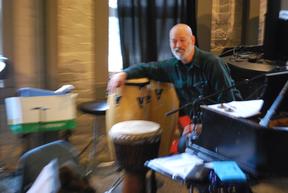
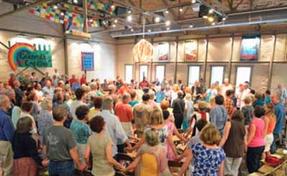
I'm Daniel Barber (Two Trees), and I bring to Tune Yourself on Piano decades of experience as a professional musician, band leader, and ritual leader working in a wide range of musical, ceremonial, and community settings. I was also a musician and actor with an improvisational theater company, carrying responsibility for musical and relational space in environments that require presence, responsiveness, and care.
Alongside my musical life, my earlier work in social services, research, political activism, and nonprofit media deepened my awareness into how people navigate uncertainty, transition, and inner conflict. In midlife, while moving through my own period of questioning and loss, I returned to the piano and discovered improvisation as a practical, embodied way to listen, choose, and move forward without requiring certainty.
I am a certified guide with the Rite of Passage Council and an ordained Jubilee! Minister of Music and Ritual. Since 2015, I've been refining these lived experiences into Tune Yourself on Piano, a sound‑based mindfulness practice rooted in listening, improvisation, and trust.
The Containers
People arrive at Tune U at different moments and with different levels of experience. What they share is a willingness to stay with what’s present. All options share the same foundational practice; what changes is the amount of time and the musical territory we explore within it.
Duration reflects capacity and appetite — not seriousness.
Core
Steadiness — A place to land
3 months
A consistent, grounding container focused on repetition and reliability.
The work returns to a small set of core practices over time, offering a steady way to settle, orient, and reconnect with what feels true.
This might be right if you’re:
seeking steadiness
coming through change
wanting support without pressure to expand or perform
Musical orientation:
Foundational improvisation & physical orientation
This container supports:
ease across the keyboard
sustained physical and auditory orientation
using sound as a steady point of reference
I’m so much more forgiving with myself.
Melinda Toney
$130/mo
$390 total (paid quarterly)
→ Continue with Core
Steadiness
Foundation & permission
Journey
Exploration — Listening in motion
6 months
A flexible container that invites movement, curiosity, and play within a supportive structure.
The work follows what’s emerging, exploring variation and contrast while staying rooted in the practice.
This might be right if you’re:
feeling ready for something new
curious about your edges
navigating change and wanting support while you move
Musical orientation:
Harmonic fluency & expressive choice
This container supports:
developing greater harmonic freedom
recognizing and responding to recurring patterns
allowing insight to settle through practice
I’m watching something unfold in me that I’ve never seen before.
Danita Banko
$110/mo
$660 total (paid semi-annually)
→ Continue the Journey
Exploration
Fluency & expression
Quest
Integration — Sound as companion
12 months
A long‑range container oriented toward coherence over time.
Practices unfold across months, allowing sound, meaning, and relationship to mature and integrate into daily life.
This might be right if you’re:
seeking depth over time
wanting a long‑term relationship with practice
interested in the piano as an ongoing companion
Musical orientation:
Integration, repertoire & collaboration
This container supports:
playing and adapting previously written material
replicating and responding to improvised ideas
exploring relational and collective musical contexts
It's natural. I don't have to struggle to find it. It is now part of my way and it's guiding the way I interact in life.
Dana Williams
$90/mo
$1180 total (paid annually)
→ Engage with Quest
Integration
Continuity & collaboration
Payment plans are available... reach out if a different rhythm would help.
Closing Orientation
You don’t need to decide today.
You’re welcome to sit with this, revisit it, or listen a little longer. Often, remembering what’s been quietly present for some time, is gentler than trying to decide something new.
Whether or not you choose to work with me, there is value in attending to the quieter voices. The ones that don’t demand attention, but don’t disappear either.
You might take a moment to ask yourself why you’re reading this now.
Why this invitation, at this point in time.
It may be that who you are right now, in the context of the world as you’re experiencing it, is asking something of you.
Not urgently.
Just honestly.
The work will still be here.
Steady.
Attentive.
And waiting.
 IAmSound.info
 IAmSound.info
Tune U: Play your way home
